

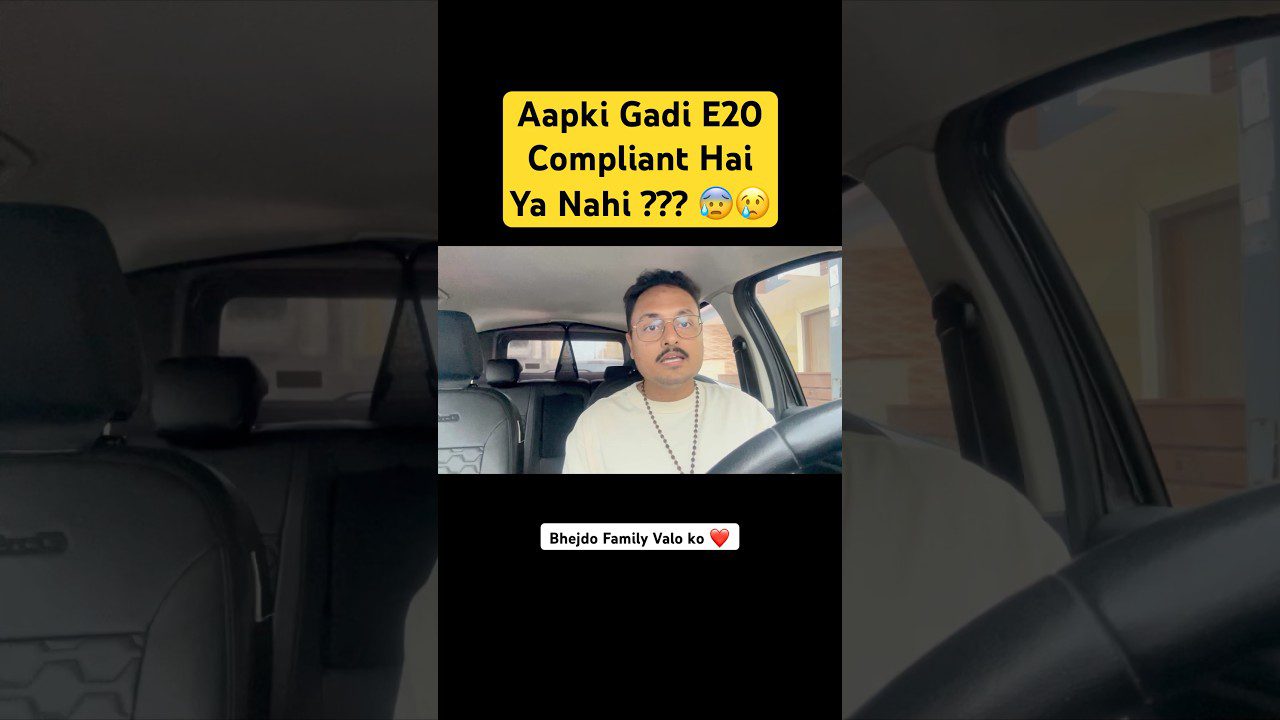
How to Check if You Have an E20 Compliant Car: Tata Punch, NEXON, Creta, Dzire, XUV #Shorts
Hook: Real-Life Pain + Clean Sarcastic Humour
Picture this: You’re cruising down the highway, feeling like a million bucks with the windows down, when suddenly, a friendly voice from the dashboard pops up, “Congratulations! Your car is now part of the E20 elite club!” Wait, what? E20? Is that a new drink? Should I ask for a straw? Ah, the fun of adulting—where checking for compliance feels like a pop quiz on a subject nobody mentioned until yesterday.
If you’re driving a Tata Punch, NEXON, Creta, Dzire, or XUV, you might want to pay attention. Because, believe it or not, being E20 compliant isn’t just a fancy way of saying your car can sip on gloriously blended fuels—it’s a ticking time bomb, a badge of honour, or maybe just a confusing jargon that requires a PhD in fuel science to decode.
What It Actually Means
So, what is E20 compliance, and why should you care? Let’s break it down without turning you into the next unlikely contestant on a game show.
E20 simply refers to fuel that contains 20% ethanol. Think of it as a smoothie for your car, but instead of banana and kale, you’re loading up with a bit of corn. This blend is supposed to reduce harmful emissions and help our planet heal a tiny bit from the carbon mess we’ve collectively made.
Imagine your car is on a health kick. Instead of just gasoline (the greasy cheeseburger of fuels), it’s now slurping E20 (the quinoa salad). Who knew your vehicle could be so trendy? And just like dating apps, not every car is compatible with this fuel blend—some just aren’t ready for that commitment.
Deep Breakdown (Serious + Valuable + Easy)
Causes
Why do we even need this E20 thing? Environmental concerns, my friend. Carbon emissions are like that bad roommate who never leaves but somehow makes you feel guilty when you want to kick them out. Governments pushed for biofuels as a solution, giving rise to E20.
How It Works
E20 works by blending ethanol (renewable and derived from plants) with regular gasoline. So, when you fill up, it’s like giving your car an eco-friendly shot of energy. It still runs like a champ but with a few less fumes trailing behind.
Why It Matters
Knowing if your car is E20 compliant matters because driving a vehicle that isn’t compliant while using E20 fuel could lead to serious engine issues. Think of it like feeding a cat sushi; it might not go over well.
What People Don’t Know
Many drivers assume their vehicle can take anything thrown its way, like that one friend who thinks they’re invincible to spicy food. But manufacturers have specifications for a reason—follow them, or the consequences might just blow up, quite literally.
Hidden Sides
There’s a lot of corporate mumbo-jumbo behind E20 too. Fuel suppliers are adjusting their blends, and you might not even know it! One day your car is getting the “good stuff,” and the next day it’s not. “Surprise! Here’s the E10 blend instead,” they say as you roll your eyes.
Industry Behavior
Some car companies have embraced E20, while others are pretending it’s that awkward relative nobody mentions at family gatherings. This inconsistency can lead to a lot of confusion and potential headaches for drivers.
Real Consequences
Ignoring E20 compliance could lead to performance issues, engine knocking, and, God forbid, hefty repair bills. So, if you glide into a gas station like it’s a painted dream but drive off clueless, you might want to check your owner’s manual next time.
Comparison Section (Fun but Factual)
Let’s compare driving a car that is E20 compliant versus one that isn’t:
-
E20 Compliant Car: It happily guzzles down its fuel blend while sticking to all the environmental norms. Think of it as that one friend who’s a vegetarian but never preaches about it.
- Non-Compliant Car: It’s like that friend who orders a salad but adds bacon and ranch dressing. Sure, it looks healthy on the surface, but the reality is a little greasy. You might end up in the shop faster than your friends can say, “I told you so!”
How This Affects Your Money / Life / Mind
Let’s face it, owning a car is like adopting a pet—it can be rewarding, but it also comes with surprises. Suddenly facing repairs because of non-compliance is like realizing your dog has chewed your favorite shoes. It stings—and it stings harder when your bank account takes a hit.
Imagine prepping for a weekend road trip, only to find out your car needs costly repairs because you didn’t check its E20 compatibility. Cue the race against time, budget-slashing, and the nagging feeling of regret. Whoever said adulthood was glamorous clearly didn’t experience the “E20 fiasco.”
Practical Guidance (Actionable Steps)
Here are simple steps anyone can follow to check if your car is E20 compliant:
-
Check Your Owner’s Manual: It’s like reading the rules before a game; don’t skip this crucial step.
-
Look for Labels: Many manufacturers place an E20 sticker near the fuel cap. If you see it, you’re golden. No sticker? Time for some digging.
-
Visit Manufacturer Websites: They usually list compliance in FAQs. You know, for those of us who prefer sitting in our pajamas for research.
-
Ask Your Mechanic: They’re like the wise old sages of the automotive world. Don’t hesitate to seek their wisdom!
- Pop In for a Check-Up: If you’re still uncertain, bring your car in for a compatibility check. Think of it as your vehicle’s own health check-up.
TL;DR Summary (Funny + Clear)
- E20 is 20% ethanol fuel—kind of like a health drink for cars.
- E20 compliance is crucial to avoid engine disasters.
- Some cars are cool with E20, others are not. Like picking friends!
- Always check your owner’s manual; it’s not just for decoration.
- A sticker near your fuel cap? You’re in the clear!
- Ignoring E20 compliance can lead to wallet-empting repairs.
- Knowledge saves you from the “car horror story”!
Final Thought
As you dive into the maze of E20 compliance, remember: checking your car’s compatibility is like checking your fridge before cooking dinner. No one wants a surprise corn casserole when you were expecting a five-star meal! Stay savvy, stay compliant, and your car journey will roll smoothly—preferably with the windows down and a good playlist blasting. Happy driving!

Utsav is an automobile enthusiast and auto news writer with 2+ years of experience in the Indian car industry. He has covered major launches, done detailed car reviews, and follows trends in the EV segment.